Field Data. Independent Validation.

Impact &
Validation

Numbers from the field, verified by independent third parties. Not projections — results from 4 tonnes of real cacao fermented across 8 Thai regions.

TCCF CBQA Protocol

Independently cut.
Independently verified.

The Thailand Craft Chocolate Festival's CBQA (Cacao Bean Quality Assessment) is the industry-standard validation protocol for fermentation quality. The cut test — slicing 100 beans and counting fully fermented, under-fermented, and mouldy specimens — was independently verified by TCCF.

GOcacao did not conduct or supervise the evaluation. Results are the independent finding of TCCF.

GOcacao Batch 84.5%

Well-fermented beans — TCCF cut test

Control Batch 67.7%

Well-fermented beans — traditional method

Evaluation Protocol

The CBQA protocol assesses 100 beans per batch. Each bean is cut and classified as fully fermented, partially fermented, or defective. The well-fermented percentage is the primary quality indicator used by buyers, exporters, and craft producers internationally.

EVALUATOR — TCCF (Independent)
PROTOCOL — CBQA (Cacao Bean Quality Assessment)
METHOD — Cut test, 100-bean sample
RESULT — 84.5% well-fermented (GOcacao)
CONTROL — 67.7% well-fermented (standard)
DELTA — +16.8 percentage points
STATUS — Independent, unsupervised evaluation
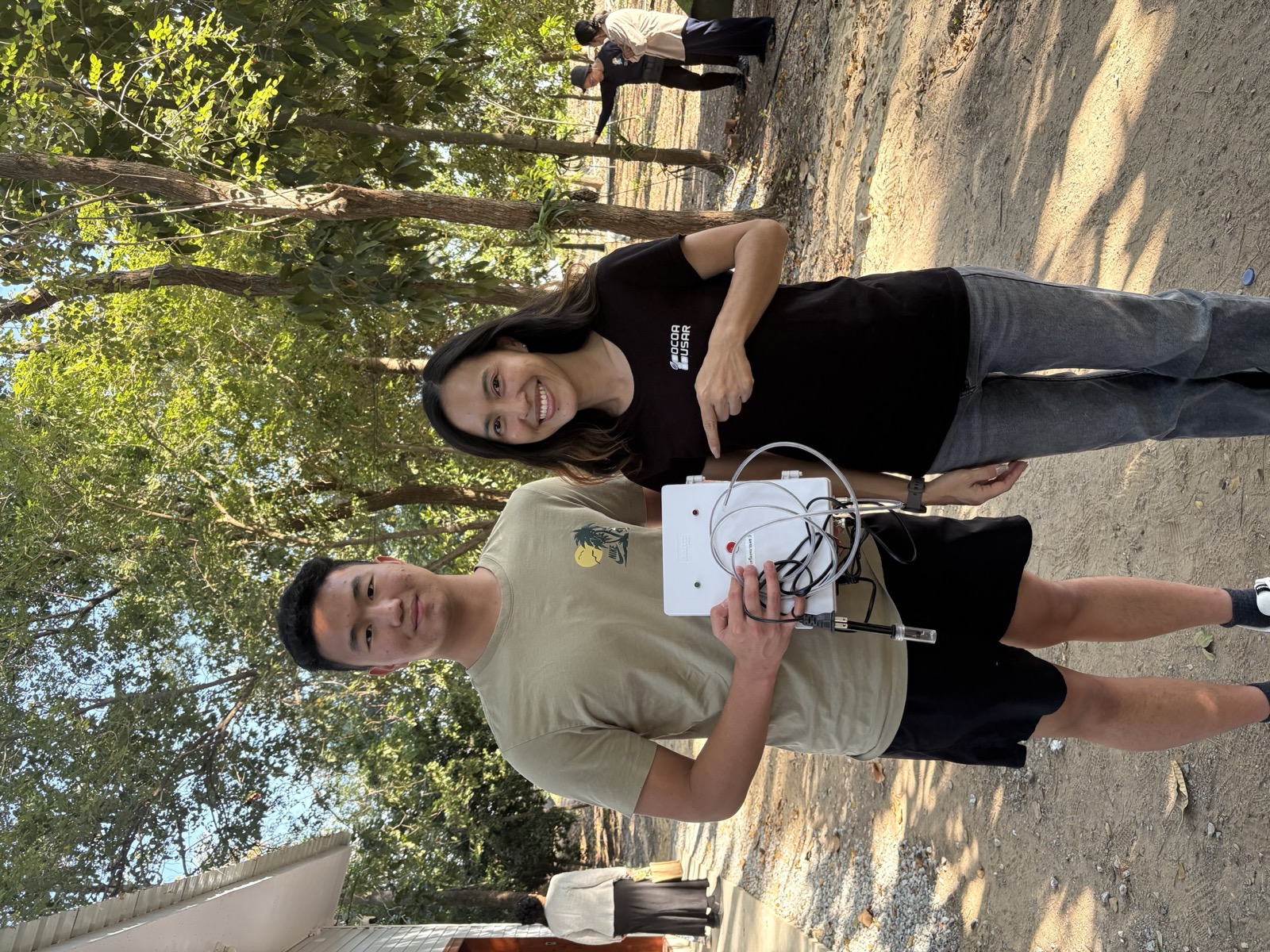
With Dr. Thansiphorn Na Nan — TCCF validation
Validation — with Dr. Thansiphorn Na Nan
Research

A field-based value chain analysis of Thailand's cacao sector was accepted for publication at IEOM Asia Pacific 2026 — peer-reviewed conference proceedings. 1st Place Poster Award, Paper ID 350.

5.4 days avg ferment time vs 7.2 days traditional

25% reduction in fermentation cycle length — more batches, less waiting, lower risk of over-fermentation.

3.5% coefficient of variance vs 26.8% traditional

Batch-to-batch consistency is 7.7× greater with GOcacao — the kind of reliability buyers and exporters require.

4T cacao processed deployed across 8 sites

Real field data — not lab conditions. Processed across diverse microclimates, cooperative structures, and farmer experience levels.


Batch Consistency

3.5% vs 26.8%.
The reproducibility gap.

Coefficient of variance (CV%) measures how much batch quality fluctuates around the mean. Traditional fermentation is chaotic — 26.8% CV means a buyer can never know what they're getting. GOcacao at 3.5% CV is comparable to controlled industrial processes.

For buyers, exporters, and chocolate makers, consistency is as valuable as peak quality. A reliable 84% is worth more than an unpredictable average with spikes and crashes.

GOcacao — CV 3.5%
Traditional — CV 26.8%
What this means

A CV of 3.5% falls within the tolerance range expected of professionally controlled fermentation at established cooperatives. GOcacao delivers this at smallholder scale.


Deployment Footprint

8 sites.
One device.

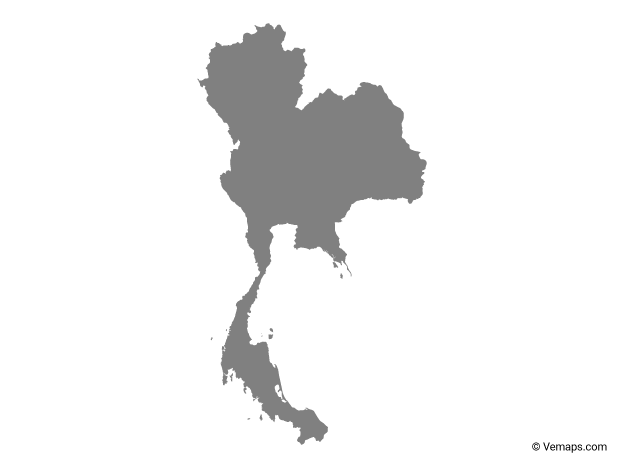
GOcacao deployment sites across Thailand
8 active deployment sites
Site Directory
Chiang Mai

Northern Thailand. Mountain-zone fermentation, high diurnal temperature variance.

Lampang ×2

Two cooperative sites. Northern plains. One of the highest-yield deployment locations.

Phrae

Northern cooperative. 13 active farmers, 30 joining. GOcacao transformed a former orange-growing community into Thailand's newest premium cacao collective.

Nakhon Pathom

Central Thailand. Humid lowland climate. Close-proximity monitoring of multiple boxes.

Ban Phaeo

Samut Sakhon Province. Coastal microclimate with high ambient humidity.

Bangkok

Urban cooperative and R&D base. Also used for controlled comparison trials with TCCF.

Sa Kaeo

Eastern border region. Dryer conditions, lower humidity. Algorithm trained on variance.

Rayong

Gulf of Thailand coast. Tropical coastal climate, high heat and humidity loading.

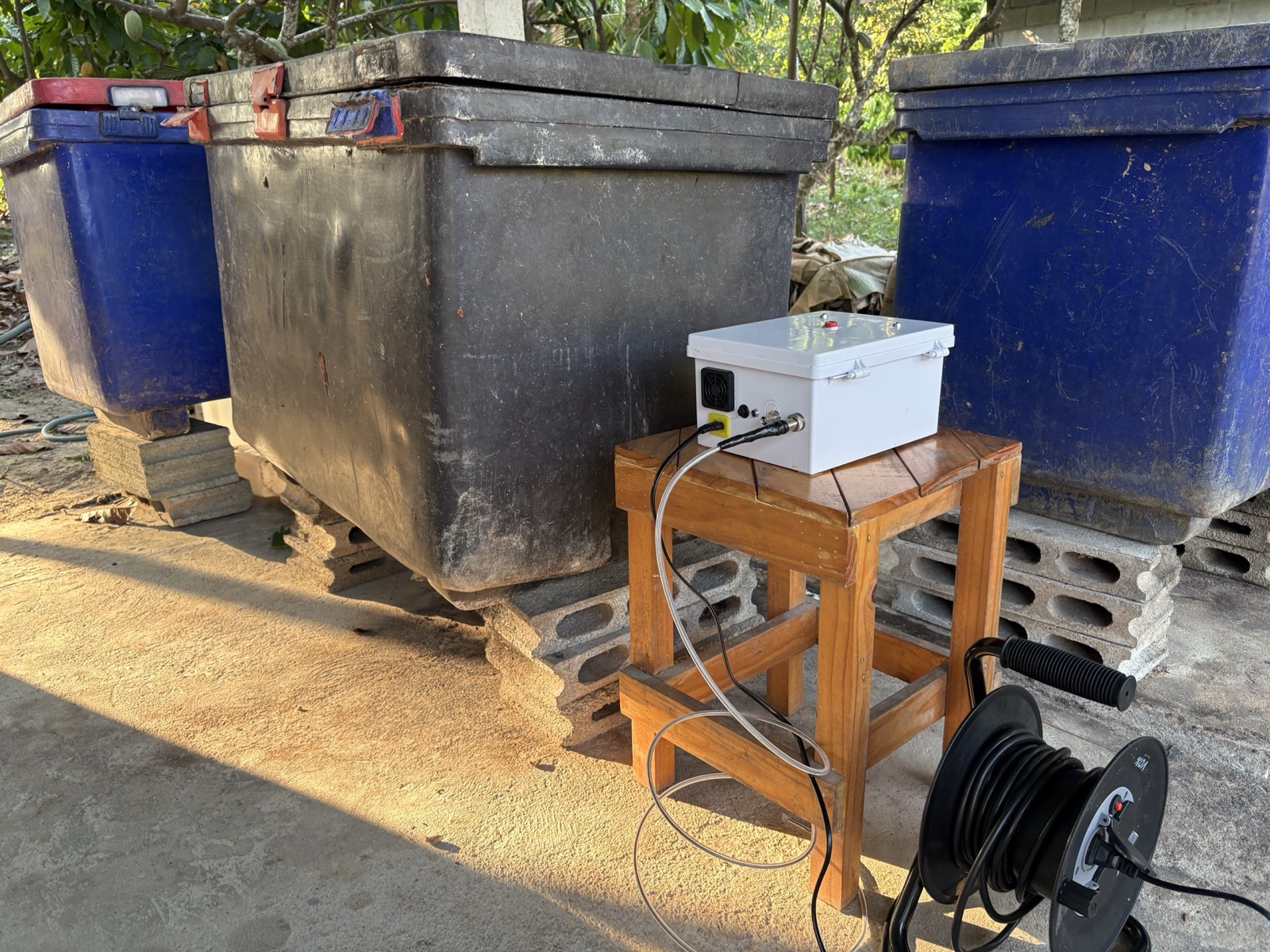
GOcacao — Rayong deployment site
Rayong Site
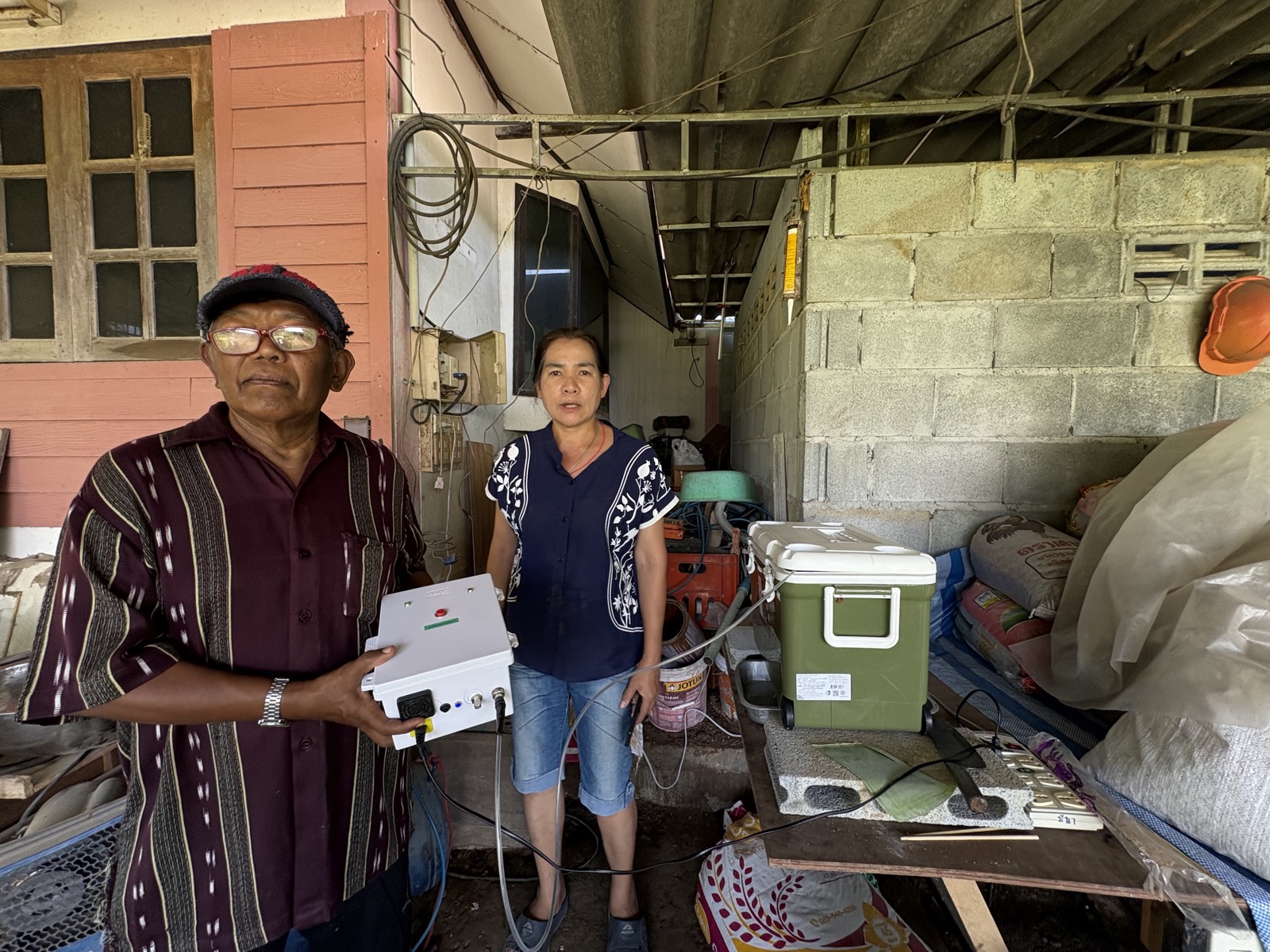
GOcacao — Sa Kaeo deployment site
Sa Kaeo Site
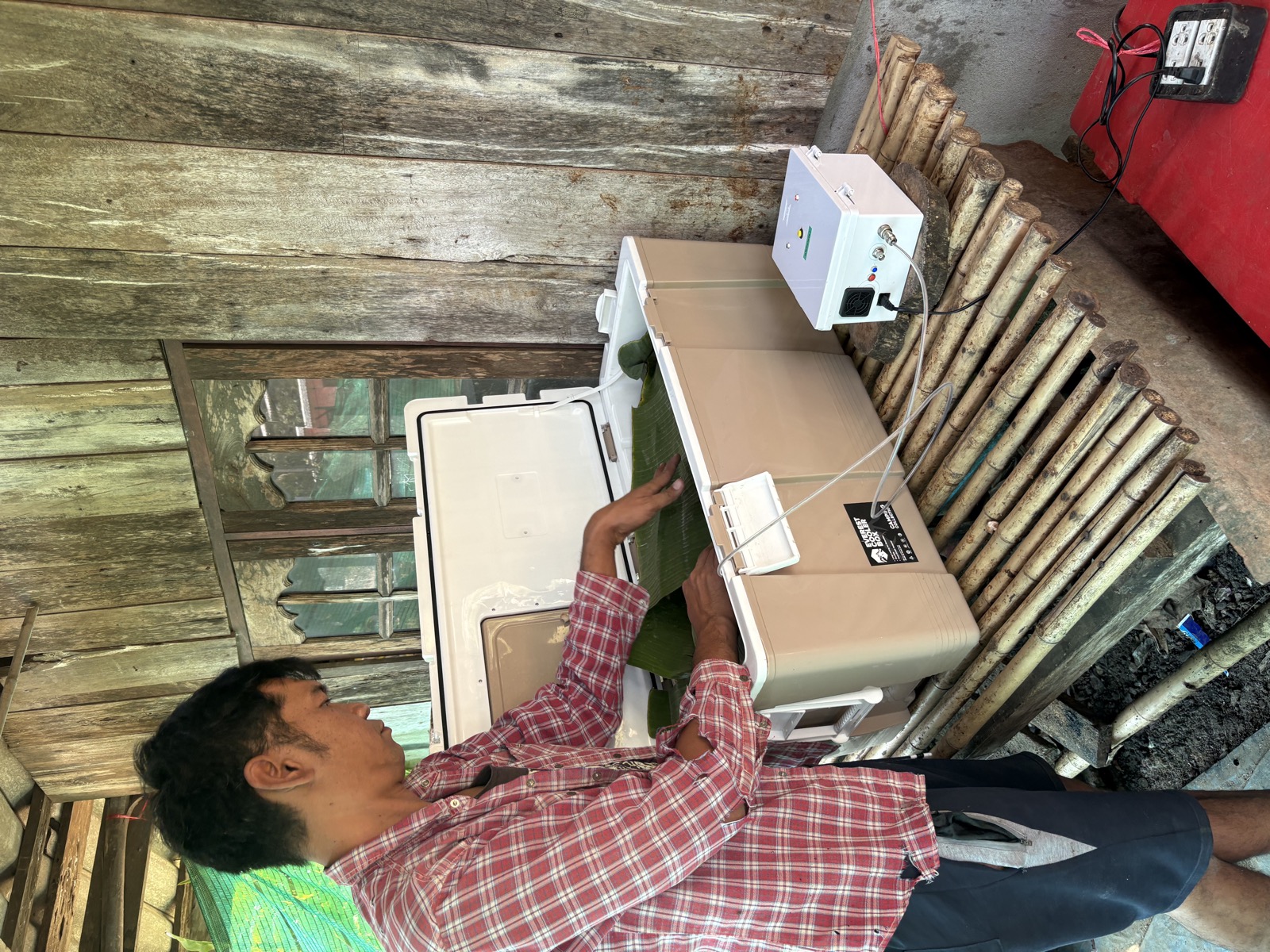
GOcacao — Lampang deployment
Lampang Site
Total processed

4 Tonnes

Across 8 sites, diverse microclimatic conditions.


Farmer Impact

Better beans.
Better income.

GOcacao farmers — Thailand
Farmer cooperative — Thailand

The entire purpose of GOcacao is to shift economic value down the supply chain — to the farmers who grow the cacao, who currently capture less than 6% of what the industry is worth.

Better fermentation means higher quality. Higher quality commands a premium. GOcacao makes that premium accessible to every smallholder farmer with $100.
25%
Faster fermentation cycle
8
Active cooperative partnerships
4T
Cacao processed to date
Income Transformation

90 to 130.
What better fermentation does.

Standard cacao in Thailand fetches around 90 baht per kilogram. GOcacao-monitored batches in Phrae now consistently achieve 130 baht/kg — a 44% income increase driven entirely by better fermentation data.

That gap — 40 baht per kilogram, every batch, every season — is what the difference between guessing and knowing looks like in practice.

Oranges (former crop) 10 ฿/kg

Market average — Phrae province, 2023

Cacao — without GOcacao 90 ฿/kg

Standard market rate — unoptimised fermentation

Cacao — with GOcacao 130 ฿/kg

Premium achieved — Phrae cooperative, 2024

The Phrae Numbers

Batch size 50 kg
Price achieved 130 ฿/kg
Revenue per batch 6,500 ฿
Batches per year 12 – 18
Annual revenue 78,000 – 117,000 ฿
vs standard cacao (90 ฿/kg) +44%
Active farmers 13
Joining next season 30+

Case Study — Phrae, Northern Thailand

From oranges
to premium cacao.
One community.

Teaching fermentation to Phrae cooperative farmers
Hands-on training session, Phrae
Cooperative training, Phrae Northern Thailand
GOcacao field session, Phrae
Phrae cooperative group
The Problem

Cacao trees.
Zero fermentation knowledge.

For years, the Phrae community grew oranges. Then orange prices collapsed — falling to as low as 10 baht per kilogram. The community had hundreds of cacao trees and land well-suited to the crop, but no understanding of the fermentation process that separates raw cacao from high-value product.

Without proper fermentation, cacao is worth little — unfermented or poorly fermented beans are rejected by premium buyers. The community had the trees but was capturing none of the value.

The Intervention

GOcacao steps in.
Results followed.

GOcacao deployed devices and ran hands-on fermentation training with the Phrae cooperative. The thermokinetic algorithm guided farmers through every fermentation cycle — telling them when to turn, when to aerate, when to finish.

Within the first season, the cooperative was achieving 130 baht/kg — a 44% premium over standard unassisted cacao and thirteen times the return on their former orange crop. With 50 kg batches running 12–18 times per year, each farming family now earns 78,000–117,000 baht annually from cacao alone.

13 farmers are now active. 30 more from surrounding areas are planning to join next season, attracted by what is already one of the most dramatic agricultural income transformations in the region.

+44%
Income uplift — 90 → 130 ฿/kg with GOcacao
130 ฿
Per kg achieved — vs 90 ฿ standard
43+
Farmers — 13 active, 30+ joining
Ban Phaeo — Samut Sakhon Province
Ban Phaeo cooperative site
Nakhon Pathom deployment site
Sa Kaeo site — second view
Training at Lampang cooperative
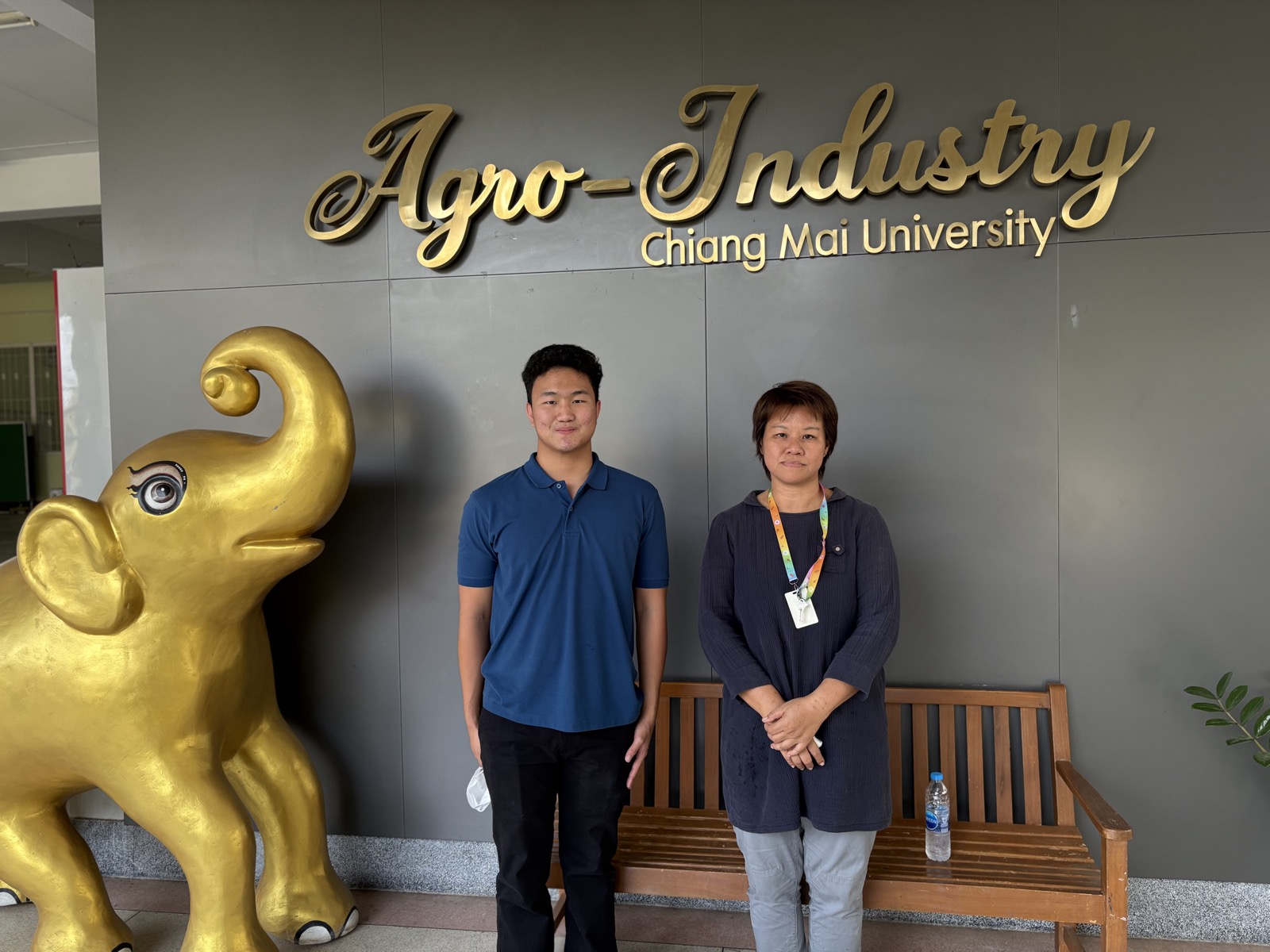
Collaboration — Chiang Mai University
Fermentation monitoring in the field
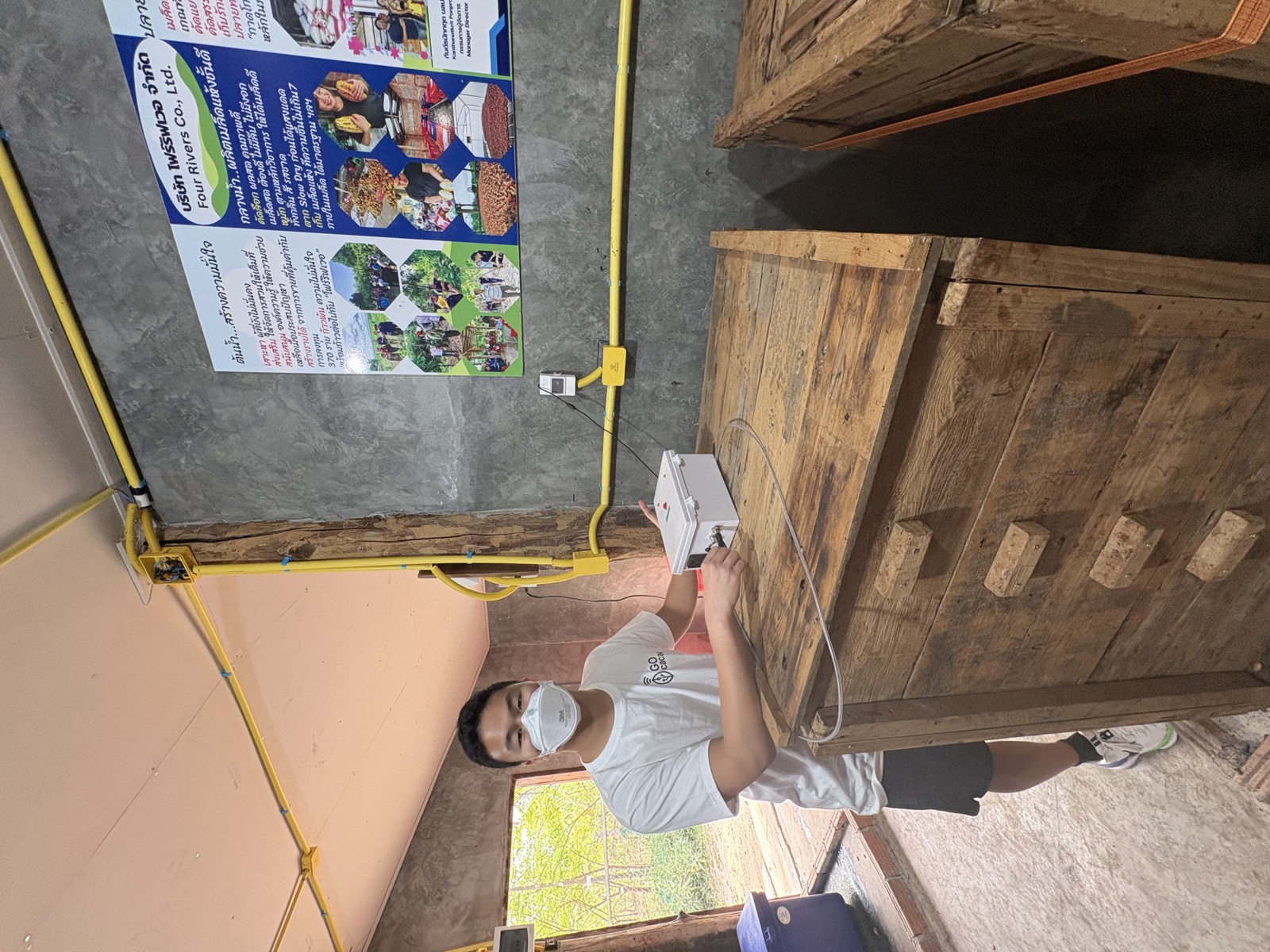
GOcacao at Four River Company
Photo Archive See all our photos → Field work  ·  Training  ·  Sites  ·  Awards  ·  People
Gallery →

Ready to scale this?

Partner
With Us

Licensing, NGO deployment, and research collaboration for institutions scaling GOcacao technology across cacao-producing regions.

Partner With Us